
Roof Repair or Replace? How to Know What Your Roof Really Needs
Deciding on roof repair or replace is one of the more stressful calls a homeowner has to make — repairs are cheaper up front, but if the roof is close to the end of its life, you could end up paying for a patch job today and a full replacement next year anyway. Here's how to actually tell which one your roof needs.
Start With the Age of Your Roof
Roofing materials have a well-documented life expectancy, and it matters more than most homeowners realize. According to the National Association of Home Builders' study on the life expectancy of home components, asphalt shingle roofs typically last 20–30 years, fiber cement shingles around 25 years, and premium materials like slate or tile can exceed 50 years. If your roof is already near the upper end of its material's lifespan, a repair is often just delaying an inevitable replacement.
Look for These Signs You Might Need a Repair
- A single isolated leak with no other visible damage nearby
- A handful of missing or damaged shingles after a storm
- Minor flashing issues around a chimney, vent, or skylight
- Shingle damage limited to one section of the roof, not spread throughout
If the damage is contained and the rest of the roof is in good shape, a repair is usually the right call — it's faster, cheaper, and doesn't disrupt the roofing system that's still performing well.
Look for These Signs You Likely Need a Replacement
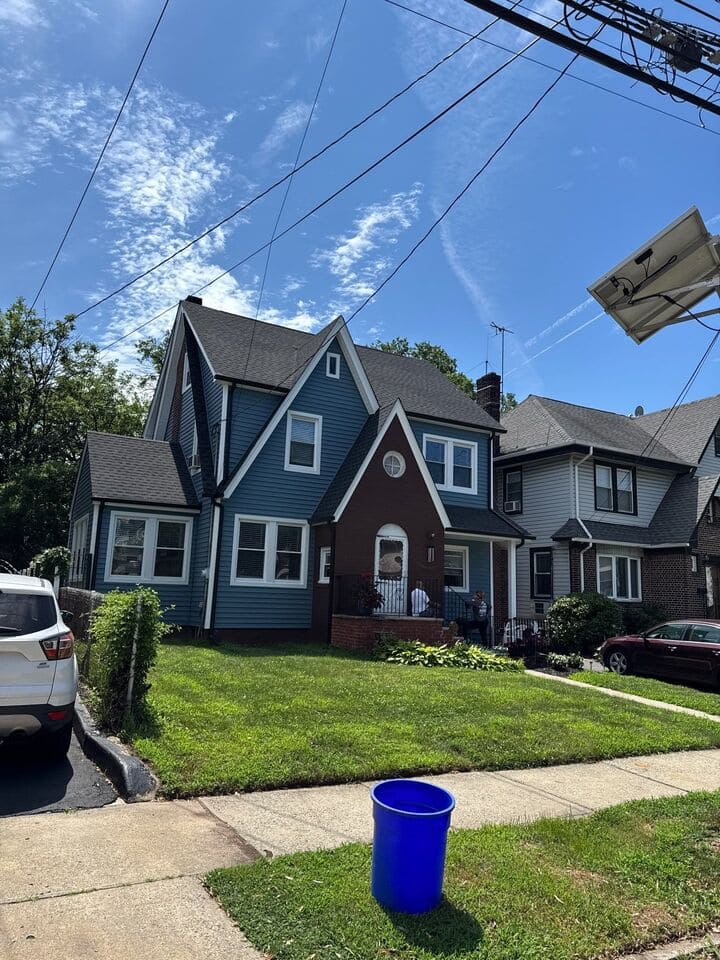
- Sagging roof repair isn't really an option — a sagging roof deck usually points to structural damage that a patch can't fix.
- Widespread hail damaged shingles across most of the roof, not just one area
- Granule loss heavy enough that shingles look bald or shiny in patches
- Multiple past repairs in different spots, meaning the roof is failing in more than one place
- Daylight visible through the roof deck from inside the attic
When damage is spread across the roof or the roofing system itself is aging out, repairing one section just means the next section fails a few months later. At that point, a full replacement is usually the more cost-effective decision.
Get a Professional Opinion Before You Decide
The honest answer is that repair-or-replace decisions are hard to make from the ground, and even harder from photos. A proper roof inspection — checking the attic, the decking, the flashing, and the shingles up close — is the only reliable way to know what's really going on. Ask for a written report and a new roof estimate alongside any repair quote, so you can compare the real cost of both paths side by side instead of guessing.
If your roof damage happened during a storm, it's also worth reading what to do in the first 48 hours after storm damage before you get any estimates — documenting damage properly can affect what your insurance is willing to cover either way.
When in Doubt, Ask for Both Numbers
A contractor who's being straight with you should be able to give you a repair estimate and a replacement estimate, along with an honest opinion on which one actually makes sense for your specific roof — not just the option that's more profitable for them. At Jay Global Home, we always show homeowners both numbers and explain the reasoning, because a roof that gets patched when it needed replacing just costs you twice.
Not sure which one your roof needs? Request a free inspection and we'll give you a straight answer, not just an upsell.
How New Jersey Weather Affects the Repair-vs-Replace Decision
Age and visible wear only tell part of the story. In West Orange and the rest of Essex County, roofs also take a beating from nor'easters, wind-driven rain, and the freeze-thaw cycle that runs from December through March. Water that gets under shingles during a January thaw can refreeze overnight, expanding just enough to widen a small crack into a real leak by spring. Ice dams along the eaves — common on homes with poor attic ventilation — push water backward under the shingle line, which is a very different (and often more expensive) problem than simple wear-and-tear.
This is why two roofs of the same age and material can need very different fixes: a well-ventilated roof on a sheltered lot might get another 5-8 years out of a repair, while an exposed roof on the same street may already be past the point where patching makes financial sense. It's worth scheduling an inspection after any major storm, and again each spring, regardless of how old the roof is.
What Roof Repair and Replacement Typically Cost in NJ
Every roof and every quote is different, but homeowners in our area generally see costs in these ranges:
- Minor repairs (a handful of shingles, minor flashing, small leaks): roughly $300–$1,500
- Larger repairs (storm damage sections, valley or chimney flashing, decking replacement in one area): roughly $1,500–$5,000
- Full roof replacement on an average New Jersey home: roughly $9,000–$25,000+, depending on square footage, roof pitch, and material (architectural asphalt shingle vs. higher-end options)
These are general market ranges, not a quote — the only way to know what your roof actually needs is a free, in-person inspection. We always show homeowners the repair number and the replacement number side by side, with the reasoning behind each, before any decision gets made.
Frequently Asked Questions About Roof Repair vs. Replacement
How long does a roof replacement take?
Most residential roof replacements in our area are completed in 1-3 days, weather permitting, once materials are on site and any insurance approval (if applicable) is in place.
Will my insurance cover a full roof replacement?
It depends on the cause of damage and your policy. Storm and wind damage are commonly covered; normal wear and age typically are not. See our guide on RCV vs. ACV roof insurance for how your payout is actually calculated, and what insurance adjusters don't always tell you during that process.
Can I repair just part of my roof instead of replacing the whole thing?
Often, yes — if the damage is localized and the rest of the roof is structurally sound. A contractor should be able to tell you honestly whether a section repair will match and hold up, or whether it's likely to create a patchwork roof that fails again soon.
What's the average lifespan of a roof in New Jersey?
Asphalt shingle roofs typically last 20-25 years nationally, but in NJ's freeze-thaw climate, roofs with poor ventilation or that have taken storm damage can need attention closer to the 15-18 year mark.
What if my roof was just damaged in a storm?
Start with our guide on what to do in the first 48 hours after storm damage — getting a tarp up and documentation done quickly protects both your roof and your insurance claim.
How It Works When You Choose Jay Global Home
Storm damage is stressful enough — dealing with the insurance company shouldn’t add to it. Here’s exactly what we handle for you, start to finish:
Free Damage Inspection
We walk the roof and document every bit of damage at no cost to you — no obligation, no pressure.
We File & Manage Your Claim
We file the insurance claim directly with your carrier and meet the adjuster on-site, so you’re not stuck on hold or buried in paperwork.
You Only Pay Your Deductible
Once the claim is approved, your only out-of-pocket cost is your insurance deductible — we handle the rest directly with your insurer.