
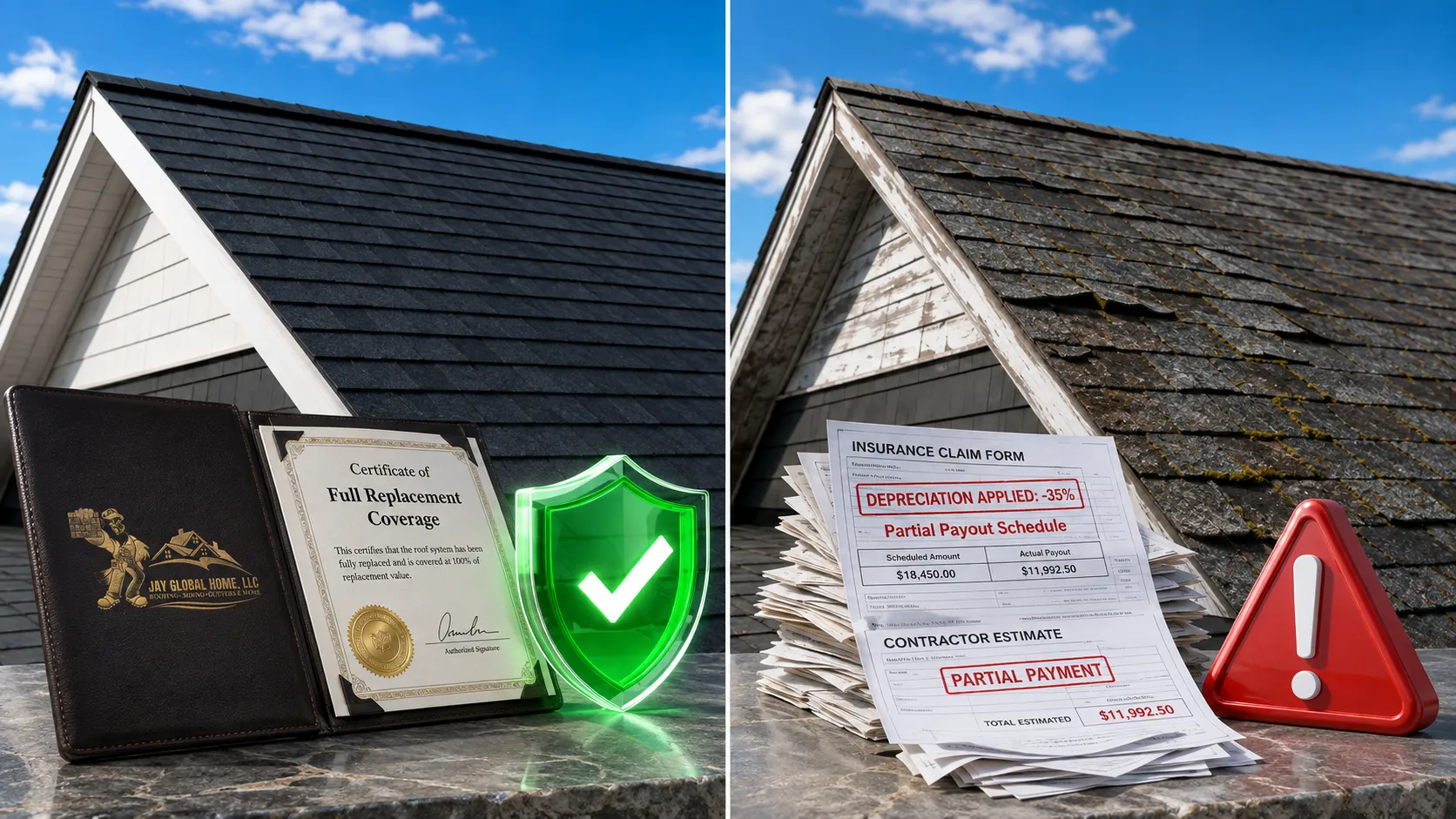
When dealing with a storm-damaged or aging roof, the biggest question is how much your insurance company will actually pay. Understanding the difference between RCV vs ACV roof insurance is the secret to maximizing your claim. This single distinction determines whether you get a brand-new roof fully covered or end up paying thousands of dollars out of your own pocket.RCV vs ACV roof insurance
At Jay Global Home, we know roof insurance policies can be incredibly confusing. That is why we created this guide to break down RCV (Replacement Cost Value) and ACV (Actual Cash Value) in plain English. Keep reading to learn how to protect your home and your bank account.
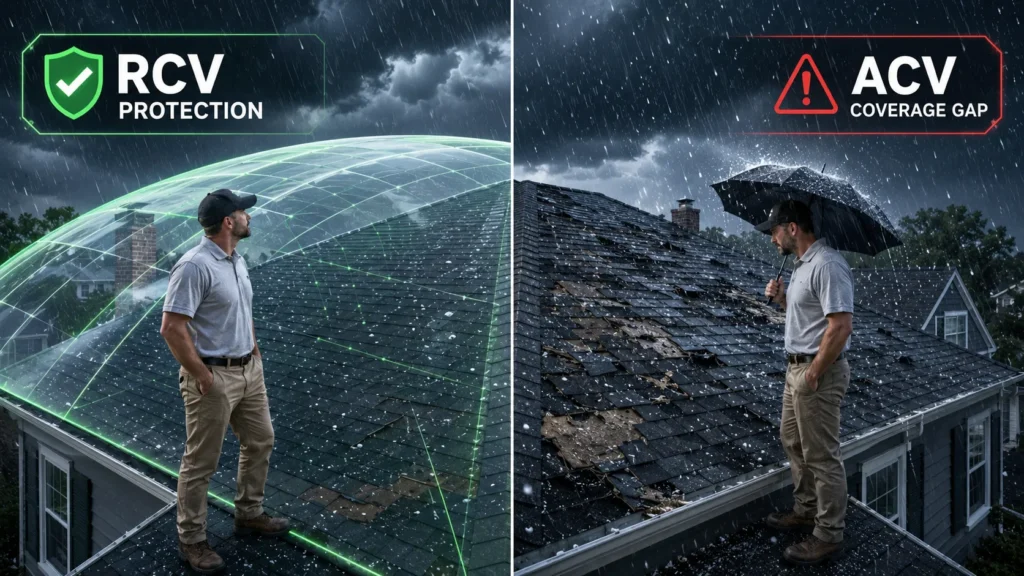
When your insurance company approves a roof damage claim, the fine print in your policy decides how much money you actually see. Two homeowners with the same damage and the same roof can end up paying very different amounts out of pocket — the difference comes down to whether your policy is RCV or ACV. Understanding this before you sign anything with your insurer is the best way to avoid overpaying.
RCV: Replacement Cost Value (the best coverage)
RCV stands for Replacement Cost Value. It’s the most complete coverage: your insurer pays what it costs to replace your roof with new materials, at today’s prices. It’s paid in two checks and includes recoverable depreciation. It’s the most common type on newer policies.
- Pays the full cost of replacement
- Paid in 2 checks
- Includes recoverable depreciation (RPS)
ACV: Actual Cash Value (limited coverage)
ACV stands for Actual Cash Value. Your insurer only pays the depreciated value of your roof — meaning they subtract what your roof was already worth less due to its age and wear before the storm. It’s paid in a single check, with no second payment. It’s common on older or more affordable policies.
- Pays only the depreciated value
- Paid in 1 single check
- No second check or recoverable depreciation
What Is Recoverable Depreciation (RPS)?
RPS isn’t a type of policy — it’s the money your insurer holds back at first (for your roof’s wear and tear) and releases later, once the work is finished and documented. It only applies if you have an RCV policy. To receive it, you’ll need to submit completion photos, an invoice, a certificate of completion, and a permit (if applicable).
How the Payment Works, Step by Step (Real Example)
- Total roof replacement (RCV): $20,000
- Less: depreciation (held back): -$6,000
- First check (ACV): $14,000
- You pay your deductible: -$2,000
- Second check (depreciation released): $6,000
- Total paid to the contractor: $20,000
- What actually comes out of your pocket (deductible): $2,000
The Deductible: The Only Thing That Comes Out of Your Pocket
Your deductible is set by your policy, and your insurer never covers it — it’s your part. It can be a flat amount (e.g., $1,000) or a percentage of the claim amount (e.g., 1%–5%). The three most common types:
- Wind/hail: 1%–5% of the claim amount
- Named storm: $1,000–$5,000, flat amount
- Other damage: $500–$2,500, flat amount
How We Help at Jay Global Home: We handle the inspection, documentation, adjuster meetings, and follow-up on both checks — you only worry about your deductible. Schedule your free inspection and we’ll tell you exactly what type of policy you have and what to expect.
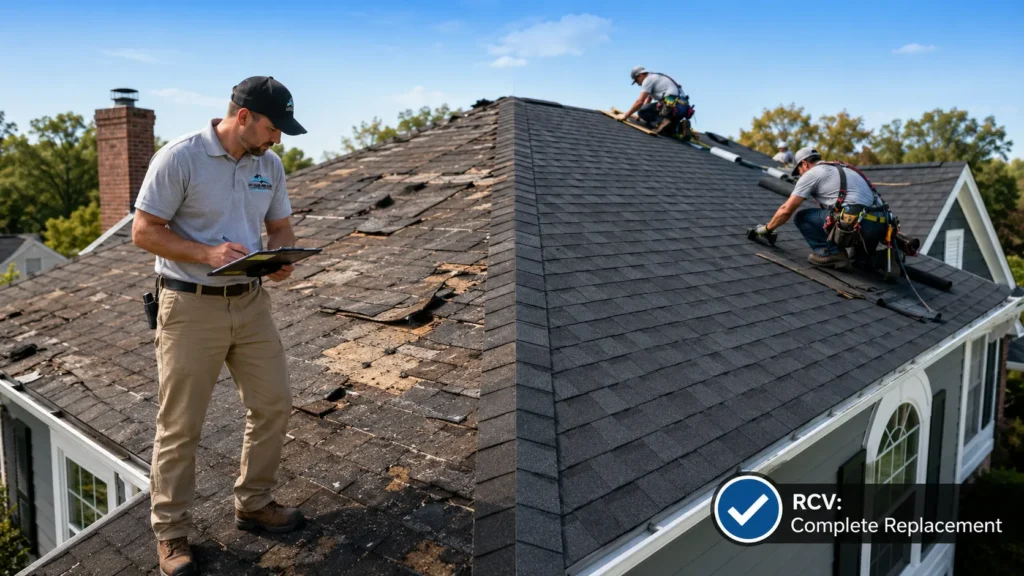
The Importance of Recoverable Depreciation in RCV
RCV vs ACV roof insurance; A key element that often confuses homeowners with RCV policies is recoverable depreciation. Essentially, when you file an RCV claim, the insurance company will usually give you an initial check based on the ACV (the depreciated value).
Once the roof repairs or replacement are fully completed and you submit proof of completion (like final invoices), your insurance provider will release the remaining withheld funds. This is the "recoverable" part of your RCV vs ACV roof insurance payout. However, if you choose not to do the repairs or fail to submit the proper documentation in time, you forfeit that money.
Comparison Table: RCV vs. ACV
| Feature | RCV (Replacement Cost Value) | ACV (Actual Cash Value) |
|---|---|---|
| Payout Basis | Current market cost of a similar new roof. | Cost of a new roof minus age and wear depreciation. |
| Depreciation | Depreciation is "recoverable" after repairs are done. | Depreciation is non-recoverable. It is your loss. |
| Out-of-Pocket | Only your deductible (in most cases). | Deductible + the accumulated depreciation cost. |
| Policy Cost | Generally higher premiums. | Generally lower premiums. |
Frequently Asked Questions & Common Mistakes
Does my RCV policy always pay 100% of the roof?
No. You are always responsible for paying your deductible. Additionally, there might be coverage limits or exclusions for specific materials or certain types of damage (like strictly cosmetic hail damage).
Can my RCV coverage automatically switch to ACV?
Yes. Many insurance policies have "aging clauses." For example, a roof older than 15 or 20 years might automatically convert from RCV to ACV coverage, even if you originally purchased an RCV policy. It is vital to review your homeowners insurance policy annually.
RCV vs ACV roof insurance; If you want to dive deeper into how these payout structures work across the country, you can review the standard insurance industry definitions provided by the Insurance Information Institute.
How It Works When You Choose Jay Global Home
Storm damage is stressful enough — dealing with the insurance company shouldn’t add to it. Here’s exactly what we handle for you, start to finish:
Free Damage Inspection
We walk the roof and document every bit of damage at no cost to you — no obligation, no pressure.
We File & Manage Your Claim
We file the insurance claim directly with your carrier and meet the adjuster on-site, so you’re not stuck on hold or buried in paperwork.
You Only Pay Your Deductible
Once the claim is approved, your only out-of-pocket cost is your insurance deductible — we handle the rest directly with your insurer.